About This Attraction
A Living Museum of 450 Million Years - Niagara's Greatest Natural Secret
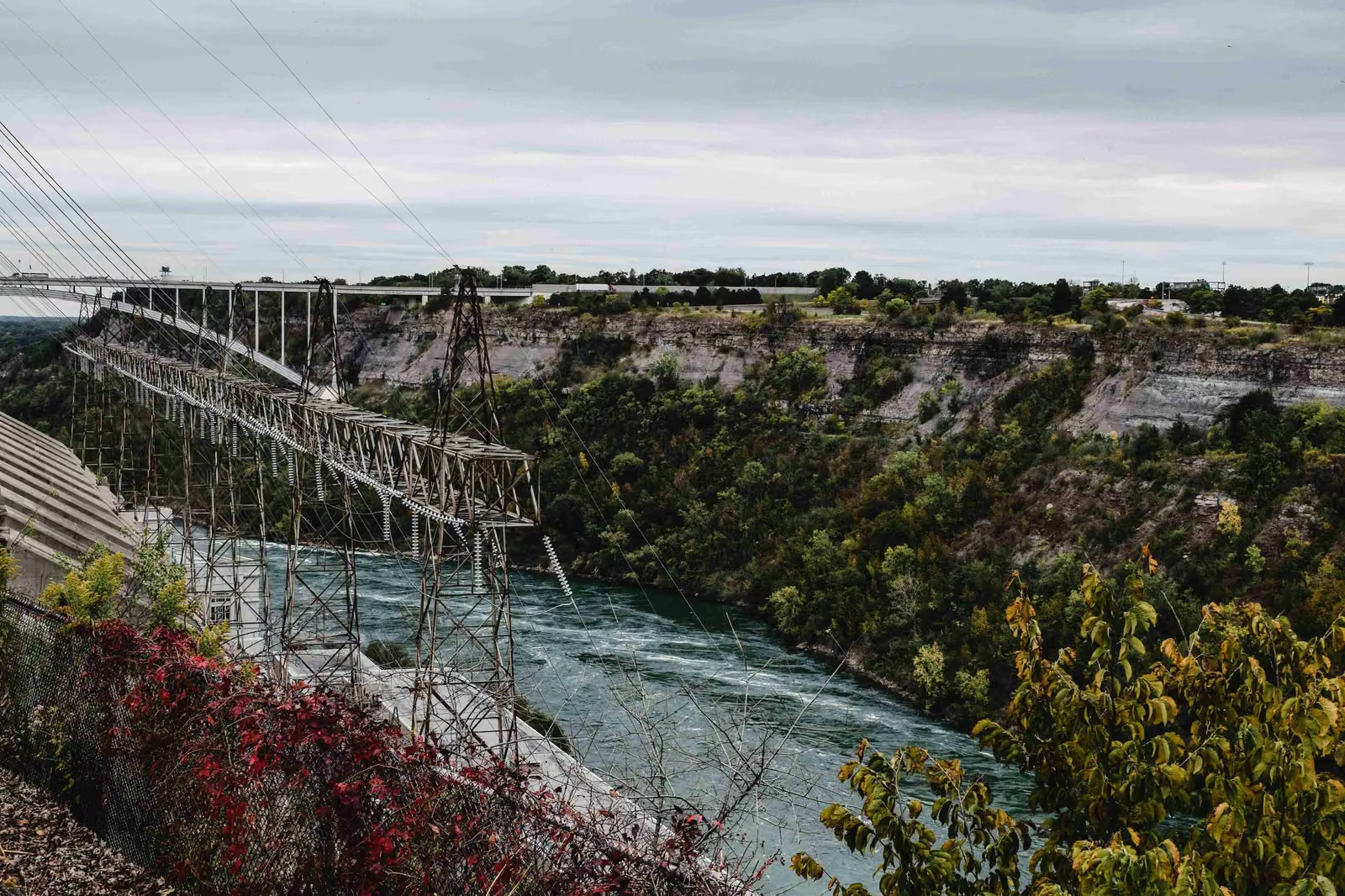
Six kilometres north of Horseshoe Falls on the Niagara Parkway, at a point where most visitors have turned back toward the hotels, lies the most extraordinary natural area in the entire Niagara region, and one of the least visited. The Niagara Glen Nature Reserve is a 40-acre Niagara Parks natural area occupying a preserved section of the ancient Niagara Gorge where the forces of industrialisation and tourism that transformed the falls area never reached. The gorge here looks today much as it looked ten thousand years ago when the retreating waterfall first carved this section of rock. The forest is ancient Carolinian, southern tree species that exist here only because the gorge microclimate maintains temperatures several degrees warmer than the surrounding landscape year-round. The bedrock exposed on the gorge walls and floor is 450 million years old.
The reserve's 4-kilometre trail network descends from the Niagara Parkway level down into the gorge via steep staircases and rocky paths, winding through enormous limestone and dolostone boulders, some the size of houses, that calved from the gorge walls as the falls eroded upstream over millennia. At the gorge floor, the Niagara River runs fast and clear beside the trail, its turquoise-green water visible through gaps in the ancient forest canopy. The trail network connects with the adjacent Niagara Whirlpool to the south and is close to White Water Walk, making the Glen a natural addition to a gorge-focused day.
The Niagara Glen is the only place in the Niagara region where you can spend two hours in what feels like genuine Canadian wilderness, no crowd barriers, no interpretive signs every ten metres, no commercial noise, within fifteen minutes of Horseshoe Falls. It is the single best answer to the question every nature-loving visitor eventually asks: "Is there anywhere here that's just… natural?" The answer is yes. It's called Niagara Glen. Almost no one knows about it. We consider this our responsibility to change.
🆓
Entry Fee
Free
Free parking too
🥾
Trail Length
4 km total
4 connected trails
🌍
Side
Canada 🇨🇦
Niagara Pkwy, ON
🪨
Geology
450M years
Exposed bedrock
🌿
Forest
Carolinian
Rare in Canada
⏱️
Visit Time
1.5–3 hours
Pace-dependent
✨ Why Niagara Glen Is Essential
🌿
The rarest Carolinian forest ecosystem in Canada. Carolinian Canada, the southern forest zone characterised by species like black walnut, tulip tree, sycamore, and Kentucky coffee tree, covers only a small part of southwestern Ontario, and much of it has been cleared for agriculture. The Niagara Glen gorge preserves an intact Carolinian forest community that exists here because the gorge's protected microclimate maintains warmth well above the surrounding plateau. Plant species found nowhere else in Canada grow on the glen's gorge slopes. Botanists regularly visit specifically for the flora.
🪨
450-million-year-old bedrock exposed at your feet. The boulders and gorge walls of the Niagara Glen expose geological strata spanning 450–480 million years, rock deposited as sediment on an ancient shallow tropical sea that covered this region during the Ordovician and Silurian periods, long before life had colonised the land. Walking the Glen's trails and placing your hand on the exposed dolostone is placing your hand on some of the oldest accessible bedrock in Ontario. The different rock layers, each a different age, hardness, and colour, are clearly visible throughout the gorge walls.
🦅
The finest birdwatching and wildlife observation in the Niagara region. The Glen's gorge microclimate and mature Carolinian forest support one of the richest wildlife communities in the Niagara Gorge. Peregrine falcons nest on the gorge walls above, visible from the trail as soaring silhouettes against the cliff face. Bald eagles fish the Niagara River from their perches on gorge-floor boulders in winter and spring. Great blue herons stalk the river margins. Red-tailed hawks and turkey vultures ride thermals above the gorge rim. The spring warbler migration through the glen, late April through May, is considered one of the finest in Ontario.
🥾
The most genuinely challenging and rewarding hike in the entire Niagara region. The White Trail, the Glen's most demanding route, involves scrambling over large boulders, navigating narrow passages between rock faces, and descending steep staircases cut into the gorge wall. It is unlike any other Niagara Falls experience and attracts a different kind of visitor: people who want physical engagement with the landscape rather than just visual contemplation of it. The effort is rewarded by the gorge floor's extraordinary sense of scale and solitude.
🤫
Genuine solitude, even in peak summer. The Niagara Glen receives a fraction of the visitors that the falls area receives, even in peak summer. On a weekday morning in July, you can walk the full trail network and encounter only a handful of other hikers. The gorge floor, where the ancient boulders, Carolinian trees, and river come together, has a quality of quietness and timelessness that is almost impossible to find anywhere else within the Niagara Falls tourist area. It is, simply, one of the most beautiful places in Ontario.
Trail Network
The Four Niagara Glen Trails - Complete Guide
The Niagara Glen trail network is colour-coded. All trails begin from the main parking area and Niagara Parks pavilion at the top of the gorge. The trails vary from accessible boardwalk paths to demanding boulder scrambles.
⚠️
Before you descend: All four trails require descending into the gorge via steep staircases, and returning the same way. The descent is moderate; the ascent can be strenuous. Allow extra time for the climb back up. Sturdy closed-toe shoes with grip are essential. Do not attempt the White or Blue trails in wet weather, the boulder surfaces become slippery. Flat sandals, flip-flops, and dress shoes are genuinely not appropriate here.
🟢 Green Trail, River Loop
Easy
📏 1.2 km
⏱️ 30–45 min
📐 Low descent
The most accessible trail in the glen, a loop that descends to the Niagara River via a well-maintained staircase, follows the river's edge along a flat gravel path through Carolinian forest, and returns to the top via a second staircase. The river section places you at the water's edge beside the Niagara River's gorge-floor rapids. Suitable for most fitness levels though the staircases may be challenging for visitors with mobility limitations.
🌊 River's Edge
🌳 Carolinian Trees
👨👩👧 Families OK
🔵 Blue Trail, Boulder Field
Moderate
📏 1.8 km
⏱️ 60–90 min
📐 Moderate descent
The Blue Trail passes through the Glen's most dramatic boulder field, enormous dolostone blocks, some the size of small buildings, that calved from the gorge walls thousands of years ago and now rest in the forest in extraordinary compositions. The trail weaves between and around these boulders before reaching the river. Some light scrambling required over roots and uneven surfaces. A highlight of any Glen visit.
🪨 Giant Boulders
🌲 Ancient Forest
📸 Photography
⚪ White Trail, Gorge Wall Route
Challenging
📏 2.1 km
⏱️ 75–120 min
📐 Steep descent
The most adventurous trail in the Glen, a route that hugs the gorge wall closely, passing through narrow rock passages, requiring occasional hand-holds, and offering the most dramatic views of the exposed geological strata. The White Trail rewards confident, physically capable hikers with gorge-wall perspectives not visible from any other trail. Not suitable in wet conditions. The return ascent is genuinely strenuous, allow at least 40 minutes for the climb back up.
🪨 Gorge Wall Views
🧗 Light Scrambling
🌟 Most Dramatic
🔴 Red Trail, Overlook Loop
Easy–Moderate
📏 0.9 km
⏱️ 25–40 min
📐 Partial descent
The shortest trail in the Glen, a partial-descent loop that takes visitors to a series of overlook points above the gorge floor before returning to the top without reaching the river. Best for visitors who want to experience the Glen's forest and geology without committing to a full descent and ascent. The overlook points offer excellent views of the Niagara River below and the White Water Walk rapids in the distance.
👁️ Gorge Overlooks
🔭 Rapids View
⏱️ Quick Visit
🪨 The Rock You're Walking On - A 450-Million-Year Timeline
Lockport Dolostone ~430 million years old · Forms the gorge rim and caprock · Hard, erosion-resistant · Holds the falls in place
Rochester Shale ~440 million years old · Soft, grey-brown · Erodes easily · Causes the undercut of the falls
Irondequoit Limestone ~445 million years old · Visible in gorge wall midpoint · Thin resistant layer
Queenston Shale ~450 million years old · Red-brown · Forms the gorge floor · Deposited in ancient river delta
All four strata are visible simultaneously from the White Trail. This is one of the finest accessible cross-sections of Silurian and Ordovician geology in North America.
Nature & Wildlife
Flora, Fauna & the Four Seasons at Niagara Glen
The Niagara Glen's Carolinian ecosystem and gorge microclimate support an extraordinary range of plant and animal life. Here is what to look for, and when.
🦅
Bald Eagle
Fish the Niagara River from gorge-floor boulders. Best seen January–April when the river runs clear. Regularly perch on large river boulders visible from the Green Trail.
🦜
Peregrine Falcon
Nest on the upper gorge walls above the Glen. Visible year-round as soaring silhouettes above the gorge rim. Spring (March–May) is nesting season, look for whitened cliff patches.
🐦
Spring Warblers
Late April through May, the Glen's Carolinian canopy becomes a warbler migration hotspot. Over 25 warbler species have been recorded in a single morning here, one of Ontario's finest spring birding locations.
🦢
Great Blue Heron
Fish the shallow river margins at gorge level year-round. Frequently visible standing motionless in the current on the Green Trail river section. Particularly active at dawn.
🌸
Spring Wildflowers
April–May: trilliums, trout lilies, wild ginger, hepatica, and bloodroot carpet the gorge floor. Some species found nowhere else in Niagara exist only here due to the gorge microclimate.
🌳
Carolinian Trees
Black walnut, butternut, tulip tree, sycamore, and Kentucky coffee tree grow here, classic Carolinian species at the northern edge of their range, sustained by the gorge's protected warmth.
🦊
Red Fox
Resident fox family in the Glen. Most active at dawn and dusk. Occasionally visible on the Blue Trail through the boulder field, particularly in autumn when food is plentiful.
🦎
Five-Lined Skink
Ontario's only lizard species, found basking on the warm dolostone boulders of the White and Blue trails on sunny days May–September. Brilliant blue tail on juveniles.
🍂
Autumn Foliage
The Carolinian species' broad-leaved canopy turns spectacular in October, earlier than the surrounding plateau due to the gorge's unique thermal conditions. Peak colour typically mid-October.
🗓️ Best Time to Visit Niagara Glen - By Season
🌸
Spring (Apr–May)
Peak season. Wildflowers carpet the gorge floor. Warbler migration. Bald eagles still fishing. Cool temperatures ideal for hiking. Trails sometimes muddy after rain.
☀️
Summer (Jun–Aug)
Full Carolinian canopy provides excellent shade. Gorge 5–8°C cooler than plateau, a natural refuge from summer heat. Longer daylight. Trail surfaces dry and firm. Busiest months overall.
🍂
Autumn (Sep–Nov)
Equal best with spring. Carolinian foliage turns extraordinary mid-October. Quieter trails. Migrating raptors visible above gorge rim. Red fox activity increases. Peak photography season.
❄️
Winter (Dec–Mar)
The gorge transforms: bare canopy reveals full geological structure. Ice formations on boulder faces. Near-total solitude. Bald eagles most active. Some trails may be icy, traction devices recommended.
Plan Your Visit
Hours, Access & Visitor Information
| Monday – Friday | 7:00 AM – 8:00 PM |
| Saturday | 7:00 AM – 8:00 PM |
| Sunday | 7:00 AM – 8:00 PM |
Open year-round. Extended hours June–August (open to 9 PM). Always check the Niagara Parks website for seasonal adjustments. Last trail access 1 hour before closing.
Trail EntryFree, Always
ParkingFree on-site
Pavilion & CaféLight refreshments
Trail MapFree at pavilion
Guided ToursVia us, combined tours
DogsWelcome on leash
Address3050 Niagara Pkwy, Niagara Falls, ON
From Horseshoe Falls~6 km north, 10-min drive
By CarNiagara Pkwy north from Table Rock
WEGO BusNiagara Glen stop, Red Line
By BikeNiagara Pkwy path, 15 min
From White Water Walk2 km north, easy walk
FootwearSturdy grip shoes, essential
Flat sandalsNot suitable for any trail
WaterBring your own, no gorge water
Wet weatherWhite & Blue trails dangerous
Fitness levelModerate, stairs at all trails
WheelchairTrails not accessible
Photo Gallery
Niagara Glen in Pictures
Before You Go
Tips & Important Information
👟
Footwear Is Not Optional
This is the single most important preparation for Niagara Glen. The trails involve uneven bedrock surfaces, exposed tree roots, boulder scrambles, and steep staircases cut into the gorge wall. Closed-toe shoes or hiking boots with rubber grip soles are essential. Flat sandals, flip-flops, dress shoes, and ballet flats are genuinely dangerous on the boulder routes and make the staircase ascent difficult. Children must also wear proper shoes. Staff turn away visitors in unsuitable footwear before they enter the gorge for their own safety.
🗺️
Recommended Trail Combinations
- First visit (2 hours): Red Trail overlook → Green Trail river loop. Covers the Glen's highlights without extreme challenge.
- Nature enthusiast (2.5 hours): Green Trail → Blue Trail boulder field. The boulder section is the Glen's most spectacular area for photography and geology.
- Full Glen experience (3+ hours): All four trails connected. Physically demanding, allow 3–4 hours and bring water and snacks.
- Birdwatching (early morning, 2 hours): Arrive at 7 AM, do the Green Trail first for heron and eagle observation at river level, then Red Trail overlook for raptor thermals above the gorge rim.
- Winter visit (1.5 hours): Green Trail only, the boulder routes require traction devices in icy conditions. The river level in winter is extraordinary.
🌧️
Wet Weather & Safety
Do not attempt the White Trail or Blue Trail in rain or within 2–3 hours of rain. The dolostone boulder surfaces become extremely slippery when wet, more so than they appear, and several visitors have fallen on wet boulder routes. The Green Trail and Red Trail are significantly safer in wet conditions as they avoid the major boulder areas. In winter, carry microspike traction devices if the temperature has been near or below freezing. The gorge floor always retains ice longer than the surface because sunlight is limited.
💡
Insider Tips
- Arrive early (7–8 AM) for the best wildlife, bald eagles are most active at the river in morning, peregrine falcons are visible soaring in the first thermals above the gorge rim
- The Blue Trail boulder field in afternoon light (2–4 PM in summer) creates extraordinary photography conditions, shafts of light penetrate the canopy and illuminate the ancient stone
- Bring binoculars, peregrine nest sites on the upper gorge walls are identifiable by the whitened rock face below them, and eagles on boulders at the river edge are best observed without approaching
- The Glen pairs perfectly with White Water Walk (2 km south), do both on the same afternoon for a comprehensive gorge experience
- In autumn (mid-October), the Carolinian species turn days before the surrounding trees, drive north on the Niagara Pkwy with the gorge on your right for the most dramatic autumn foliage drive in the region
- Bring your own water, there are no water sources at gorge level and the Niagara River should not be consumed
📸
Photography Guide
Niagara Glen is one of the finest photography locations in the Niagara region, a complete contrast to the architectural falls photography available from the viewpoints. Key shots: the Carolinian canopy from below with shafts of light (morning and afternoon); the ancient boulders on the Blue Trail with a wide-angle lens; river-level long-exposure shots of the Niagara River current from the Green Trail; gorge wall geological strata on the White Trail showing the distinct rock layers; peregrine falcon silhouettes above the gorge rim (telephoto required); and autumn foliage from any of the four trails in mid-October.
🐕
Dogs Welcome - With Conditions
Dogs are welcome in Niagara Glen on a 6-foot leash, cleaned up after by their owners. The glen is one of the most dog-friendly Niagara Parks properties. However: dogs must be kept on-lead at all times (to protect the Carolinian wildlife), dogs with mobility difficulties should not attempt the boulder sections, and on very hot summer days the gorge floor can be warm, carry extra water for your dog. The Green Trail is the most dog-appropriate of the four routes.
Guest Reviews
What Visitors Are Saying
4.9
★★★★★
3,841 verified reviews
EK
Eleanor K.
United Kingdom • October 2025 • Verified Booking
★★★★★
"I am a professional botanist specialising in Carolinian species. I came to Niagara Glen on the recommendation of a colleague and spent an entire day here across two visits. The quality of the Carolinian forest community on the gorge slopes is exceptional, species composition and structural complexity that you simply do not encounter in managed or disturbed Carolinian habitats. The gorge microclimate preserves species at the northern limit of their range in conditions of remarkable health. I have been to the falls themselves. The Glen is, scientifically, incomparably more interesting. Please protect it."
🌿 Carolinian Expert🔬 Botanical Survey
⭐ TripAdvisor · Verified Visit
MP
Marco P.
Florence, Italy • May 2025 • Verified Booking
★★★★★
"Our guide from Visiting Niagara Falls took us here as a surprise addition to the Canada tour itinerary, 'One more stop,' she said. She brought us to the gorge edge, told us to look down, and then led us down the staircases into the forest. I want to be clear about what happened: we descended from a crowded tourist area into an ancient forest where 450-million-year-old rock was lying around us in pieces the size of houses, and there were exactly four other people within sight. In ten minutes of walking. At Niagara Falls. In May. This is impossible. And yet."
🌿 Surprise Addition🚌 Guided Tour
🗺️ Google Reviews · 5 Stars
RN
Rachel N.
Colorado, USA • April 2025 • Verified Booking
★★★★★
"I am an avid birdwatcher. I arrived at Niagara Glen at 7 AM with binoculars. In three hours on the trails I recorded a bald eagle on a gorge-floor boulder (less than 40 metres from where I stood), two peregrine falcons circling the gorge rim, a great blue heron fishing in the current for 20 minutes, and 18 warbler species in the Carolinian canopy overhead, including a cerulean warbler, which I had never seen before. All of this at a location that most visitors to Niagara Falls have never heard of. I am going back in autumn for the raptor migration."
🦅 Birdwatching🌅 Early Morning
📱 Visiting Niagara Falls · Verified
JY
Jun Y.
Seoul, South Korea • July 2025 • Verified Booking
★★★★★
"We spent the morning at the falls, boat ride, tunnel, everything. Then our guide brought us to Niagara Glen in the afternoon and we walked the Blue Trail through the boulder field. The contrast between the engineered tourist experience at the falls and the completely undisturbed ancient landscape of the Glen, 10 minutes' drive apart, is one of the most remarkable things about Niagara Falls as a destination. You can stand inside 450-million-year-old geology in near-complete solitude for free, directly next to one of the most visited tourist destinations in North America. This should be talked about more."
🪨 Blue Trail Boulders🚌 Guided Tour
⭐ TripAdvisor · Travelers' Choice
Getting Here
Location & Directions
3050 Niagara Pkwy - 6 km North of Horseshoe Falls
Niagara Glen is located on the Niagara Parkway approximately 6 kilometres north of Table Rock, a 10-minute drive, or 20 minutes on the WEGO bus Red Line north of the falls. Free parking is available on-site. The Ten Thousand Buddhas Sarira Stupa is a quieter stop on the same northern stretch, on River Road about 10 minutes north of the falls.
📍
Address
3050 Niagara Pkwy, Niagara Falls, ON L2E 6T2
🚗
By Car
Niagara Pkwy north from Table Rock, 6 km, 10 min
🅿️
Parking
Free on-site parking lot
🌍
Coordinates
43.1178°N, 79.0625°W
🏙️
~1.5 hrs from Toronto via QEW, follow Niagara Pkwy north past the falls
🏙️
~1 hr from Buffalo, cross Rainbow Bridge, Niagara Pkwy north ~6 km
🚌
WEGO Bus Red Line, Niagara Glen stop (also stops at White Water Walk en route)
🚴
Niagara Pkwy cycling path, 20-min ride north from Table Rock, spectacular route
🌊
Combine with White Water Walk, only 2 km south; a full gorge afternoon
Continue Exploring the Gorge
More Niagara Gorge & Nature Experiences
From $89 · age 13+ · free cancellation
⏱️ 45 min🇨🇦 CanadaApr–Oct
⏱️ 45 min🇨🇦 CanadaYear-Round
⏱️ 20 min🇨🇦 CanadaApr–Nov